
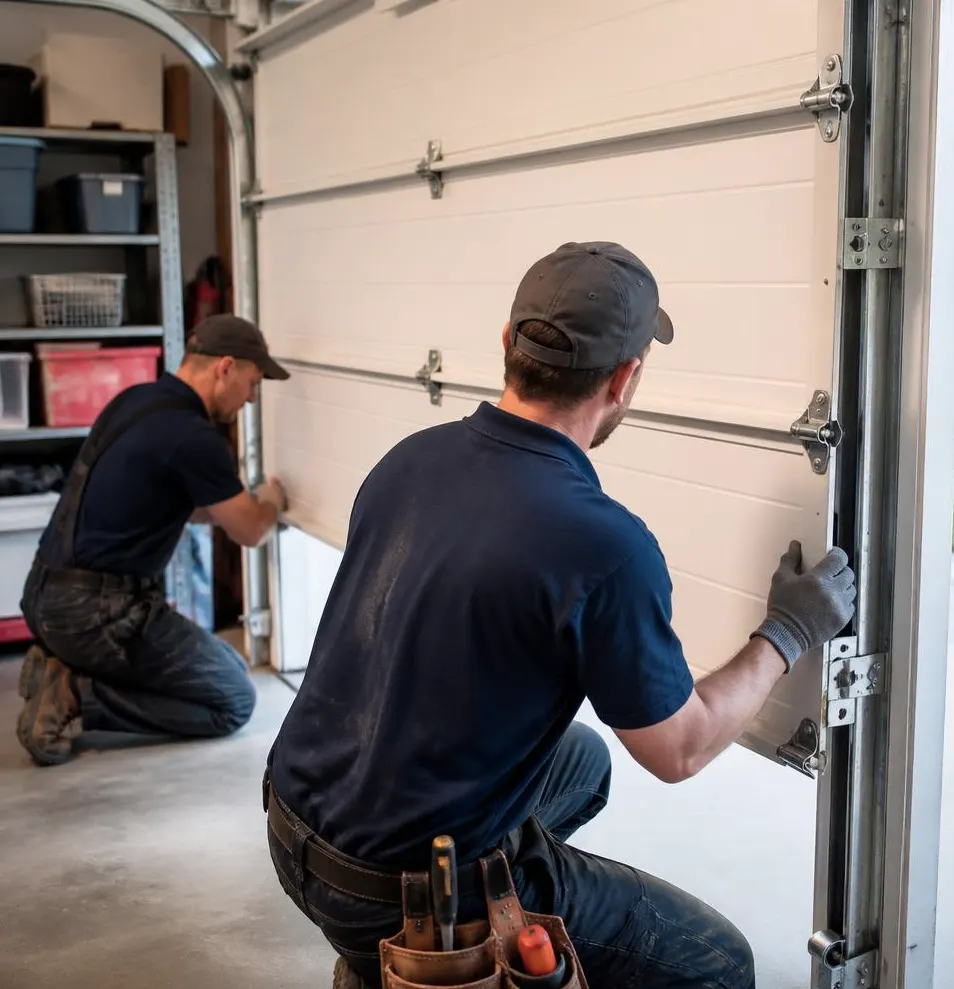
In most cases, a garage door that reverses before it closes is being stopped by its own safety system, usually the photo-eye sensors near the bottom of the tracks or the opener's travel-limit settings. Less often, the cause is a spring that's lost tension, a bent track, or worn rollers putting enough drag on the door that the opener's force sensor thinks it's hit an obstruction and backs off. The fix depends on which of these it is, and the quickest way to find out is to check them in the same order a technician would.
What This Usually Looks Like
Homeowners describe this problem a few different ways, and the exact symptom is a clue to the cause:
- The door closes a few inches, stops, and goes back up. Almost always a sensor or force-setting issue.
- The door won't move downward at all when you press the button. Could be a blocked sensor, a dead remote battery, or in colder months, ice or stiffness in the track.
- The door closes fine sometimes and not others. Points to a sensor that's slightly out of alignment, or a connector getting loose from vibration.
- The door reverses only when it's cold, wet, or humid out. Suggests moisture or temperature is affecting the sensor wiring or the door's balance.
Checking the Safety Sensors First
Every garage door opener made in the last few decades has two small sensor eyes mounted a few inches off the floor on either side of the track. If anything breaks the beam between them, blocks one of the lenses, or knocks them out of alignment, the opener will refuse to close the door or reverse it mid-travel as a safety measure.
This is the first thing worth checking because it's the most common cause and the easiest to fix. Wipe both lenses clean; pollen, dust, and the fine grit that blows around during dry stretches can film over the lens enough to confuse the sensor. Check that both brackets are still tight and pointed directly at each other; a bump from a bike, a ladder, or even a hard gust during a storm can shift one just enough to break the alignment. A small indicator light on each sensor should glow steady. If one is flickering or dark, that's your answer.
What the Fix Involves
Realigning sensors is usually a matter of loosening the wing nut on the bracket, nudging it until both lights go solid, and retightening. If a sensor's housing is cracked or the wiring has corroded from years of garage humidity, replacing the sensor pair is inexpensive and takes a technician only a few minutes.
Checking the Opener's Travel and Force Settings
If both sensors check out, the next thing to look at is how the opener itself is programmed. Every opener has a travel limit that tells it how far to lower the door, and a force setting that tells it how much resistance to tolerate before assuming it's hit something and reversing. If the travel limit is set too short, the door will reverse before it reaches the floor. If the force setting is too sensitive, normal friction from the rollers or a slightly misaligned track can trigger a false reversal.
These settings can drift over time, especially after seasonal temperature swings cause metal components to expand and contract slightly. A technician adjusts these through small dials or a menu on the opener unit, then runs the door through several full cycles to confirm it closes consistently before calling it done.
Checking the Track and Rollers
With sensors and settings ruled out, the next stop is the hardware the door actually rides on. A bent track, a roller that's worn flat, or hinges that have rusted can create enough drag that the opener's force sensor reads it as an obstruction. This kind of wear shows up more in garages that take on humidity and moisture, which is common with the heavy rain this area gets through the year. Rust on rollers or hinge pins, pine debris packed into the track, or water pooling at the base of the door are all worth a visual check.
The fix ranges from a thorough cleaning and lubrication of the track and rollers, to replacing a bent section of track, to swapping out rollers and hinges that have worn past the point of smooth operation.
Checking the Springs
If the door is heavy to lift by hand or the opener strains audibly during the first foot of travel, a worn spring may be the real issue. A weakening spring forces the opener's motor to work harder than it's rated for, which can trip the same force-based safety reversal as a mechanical obstruction. Spring replacement is not something to attempt without the right tools, since these springs carry a lot of stored tension. It's a job for a trained technician, and it's worth doing as a pair even if only one has failed, since the other is usually close behind it.
When to Call La Vergne Garage Door
If you've wiped the sensors, checked the alignment, and the door still won't close reliably, it's time to bring in a technician rather than keep adjusting settings by trial and error. La Vergne Garage Door can diagnose whether the issue is sensor-related, a worn spring, or a track that needs attention, and handle Garage Door Repair and Spring Replacement on the spot in most cases. We also offer Preventive Maintenance visits that catch roller wear and sensor drift before they turn into a door that won't close at all, which is especially useful heading into a season of cold snaps and ice.
If your garage door is reversing, sticking, or refusing to close, call La Vergne Garage Door today for fast, reliable service throughout La Vergne, TN and the surrounding area.