
The One-Sentence Rule
Every garage door opener built in the last few decades has a manual release cord that disconnects the door from the motor, so pulling it lets you open or close the door by hand in under a minute.
The exceptions: if a spring is broken, if the door is already off its track, or if the door feels unusually heavy the moment you lift it, stop. A manual release only works when the door's spring system is doing its job correctly — without that balance, the door can slam down or fall off the track, and that's not a problem to solve alone.
What You'll Need
- A flashlight or headlamp (outages often mean a dark garage, especially in winter when ice storms knock out power overnight)
- Work gloves, since tracks and cords can have grease or rust on them
- A step stool if your release cord hangs high
- A second person, if the door is a heavier double-wide model
- A locking C-clamp or pair of locking pliers, if you need to prop the door open
Step-by-Step: Opening or Closing by Hand
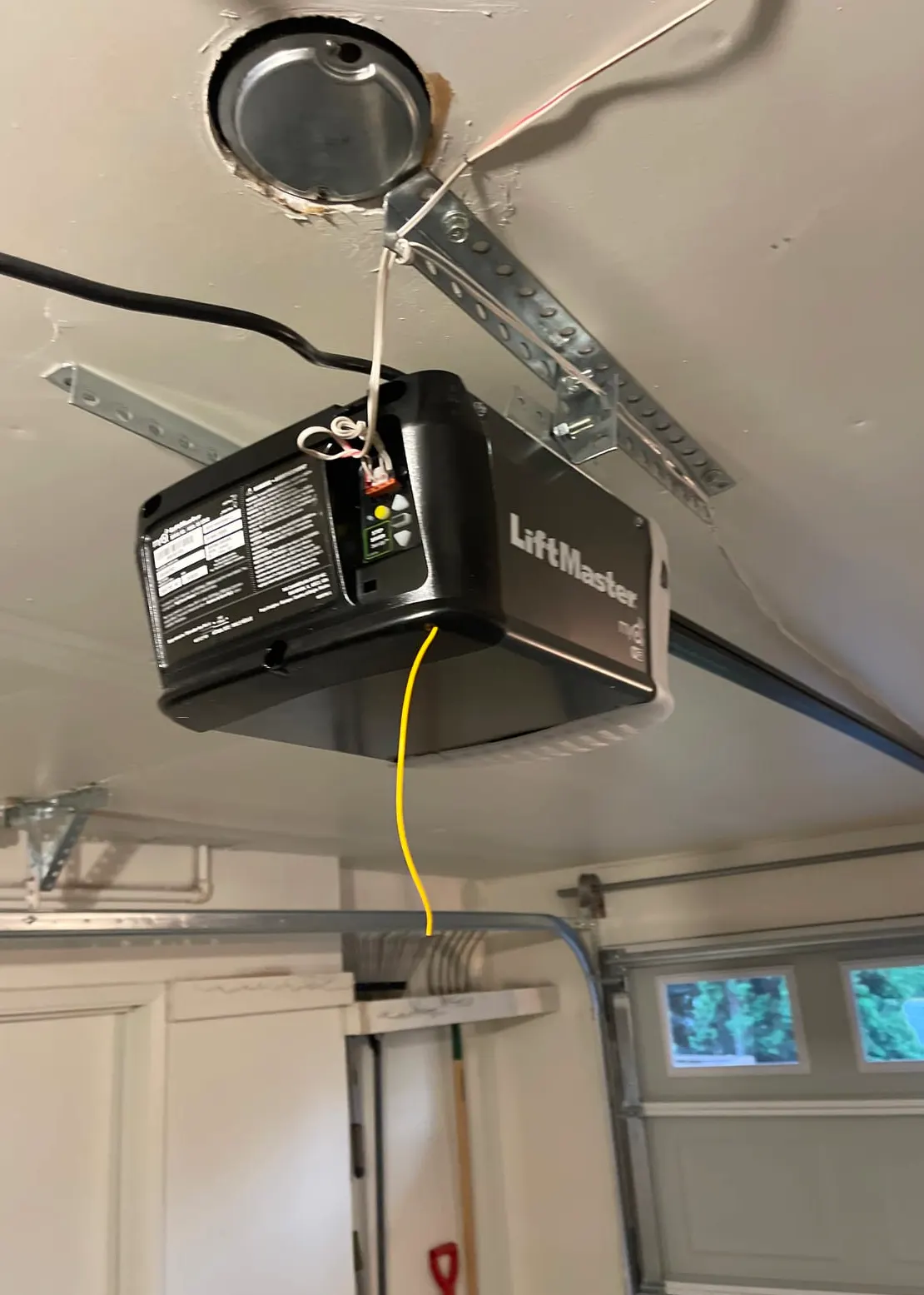
- Find the release cord. It's usually a red rope or handle hanging from a lever on the trolley, the part that rides along the rail above the door.
- Close the door first if you can. If the outage hits while the door is already open, it's safer to lower it manually before disconnecting anything, since an open door relies on spring tension that behaves differently once disengaged.
- Pull the release cord down and toward the door track. You'll hear or feel the trolley pop loose from the carriage. The opener is now fully disconnected.
- Lift or lower the door slowly, using both hands spread across the bottom panel. A properly balanced door should move smoothly and stay in place partway up on its own. If it doesn't, or if it feels like dead weight, stop and don't force it — this usually points to a spring issue.
- If you need the door to stay open, clamp a locking plier onto the track just below one of the rollers. This keeps the door from sliding back down while you're in and out during the outage.
- To close, release the clamp and guide the door down gently until it's fully seated against the weatherstripping at the bottom. In heavy rain or wind-driven storms, a fully seated door matters — a gap of even an inch lets water and debris in.
What a Homeowner Can Safely Do
- Disconnect and reconnect the manual release
- Lift or lower a door that moves smoothly and holds its position
- Prop the door open temporarily with a clamp
- Reconnect the trolley once power is back
What Needs a Technician
- A door that feels heavy, drops suddenly, or won't stay balanced partway up — likely a worn or broken spring
- A door that's visibly crooked, has a roller out of the track, or makes a grinding or popping sound as it moves
- A release cord that's stuck or won't disengage the trolley
- Any door that reverses, won't latch, or won't stay closed once the opener is reconnected
Re-Engaging the Opener Once Power Is Back
- Make sure the door is fully closed or in a known, stable position before you reconnect anything.
- Pull the trolley back along the rail until it lines up with the carriage bolt and clicks back into place. Some openers need a firm push rather than a pull — check which way your model's lever moves.
- Restore power to the opener if it was unplugged, and give it a few seconds to reset.
- Test the full cycle with the wall button, not the remote, so you can watch the door open and close completely at least once.
- Check the safety sensors near the bottom of the tracks. These small eyes can shift out of alignment if the door was moved by hand or if anything bumped the bracket during the outage. If the door reverses before touching the floor, or the opener's light blinks instead of running the motor, the sensors are misaligned.
After storms that bring down tree limbs or shift gutters — common with the remnants of hurricanes that move through this part of Tennessee — it's worth a quick look at the bracket and track for any new dents or debris before trusting the opener to run on its own again.
When to Call La Vergne Garage Door
If the door won't balance on manual release, if a spring looks stretched or snapped, or if the opener won't reconnect cleanly after power returns, that's the point to call in a technician rather than keep testing it yourself. Our Spring Replacement service handles the balance issue at the source, and our Garage Door Opener Service covers everything from sensor realignment to full opener resets after an outage, ice storm, or power surge. We'll run the door through a full cycle, check the hardware the outage may have stressed, and make sure it's reliable again before we leave.
If you're dealing with a garage door that won't cooperate after a power outage, or you just want it checked before the next ice storm or heavy rain rolls through, call La Vergne Garage Door. We serve homeowners throughout La Vergne, TN and the surrounding area, and we're ready to help.